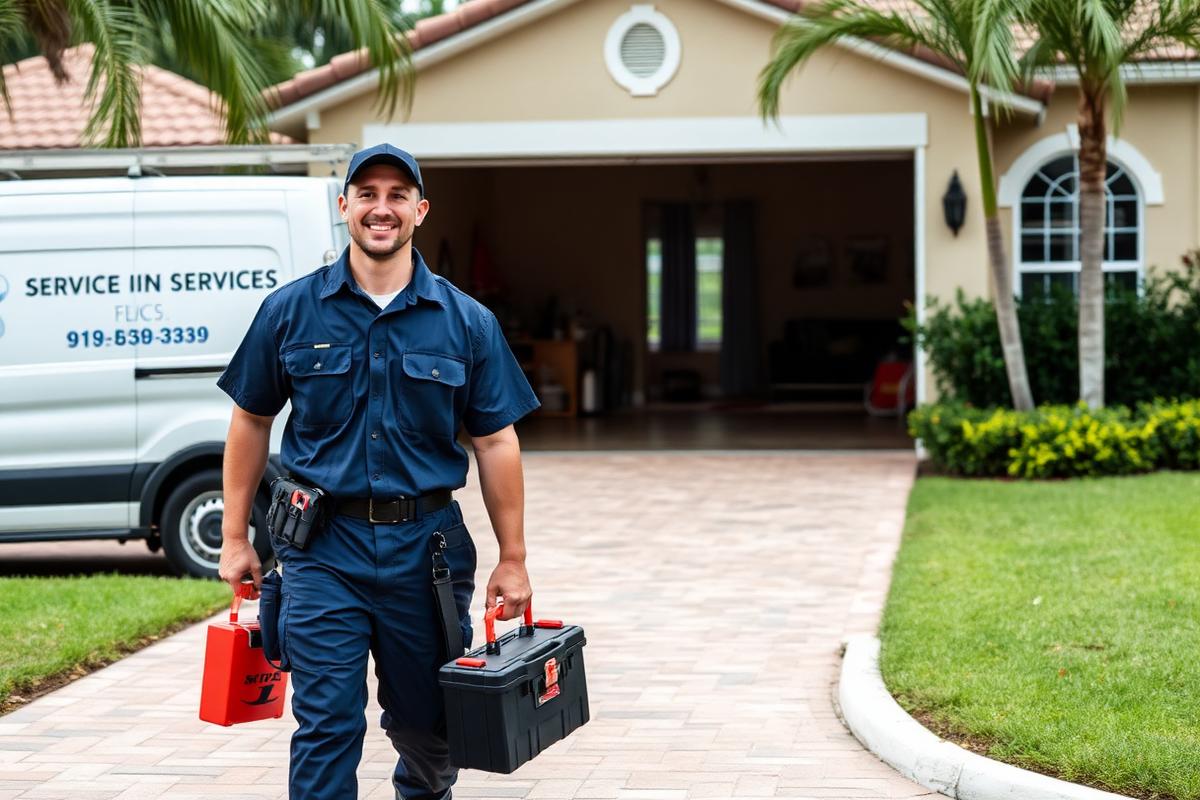
A garage door rarely fails all at once. It usually starts as a hesitation before it opens, a grinding sound on the way down, or a slight sag on one side that you tell yourself you'll deal with later. In Cape Coral, where garage doors run daily in heat, humidity, and salt-tinged air, small issues compound faster than they would inland, and a door that's merely annoying this month can become a safety hazard by next month.
Our repair visits start with a full inspection rather than a quick part swap. We look at the spring system, the track alignment, the opener's force settings, and the condition of the cables and rollers, because a door that closes crooked or reverses unexpectedly is often telling you about more than one problem at once. From there we explain what we found in plain terms and get the door back to a safe, quiet, reliable state the same visit whenever the part is on the truck.
Common Reasons Cape Coral Garage Doors Need Repair
Torsion and extension springs are the single most common repair call, since they're rated for a set number of open-close cycles and eventually give out from ordinary use rather than any single mistake. Openers are the next most frequent issue, whether that's a motor that hums but doesn't move the door, a remote that stopped responding, or safety sensors knocked out of alignment by a stray bike or cooler.
Beyond those two, we regularly repair bent tracks from a car bumping the door, frayed lift cables, worn rollers that rumble instead of roll, and panels dented in a storm or by a delivery truck. Hardware exposed to Cape Coral's humid, salt-carrying air also corrodes faster than in drier climates, which shows up as rust on hinges, tracks, and springs well before the rest of the door looks worn.
Warning Signs You Shouldn't Ignore
A door that jerks, shudders, or moves unevenly is usually a spring or cable problem, and it's one of the more urgent calls we get because a failing spring under tension can snap suddenly. Loud bangs, grinding, or squealing during operation point to worn rollers, dry hinges, or a track that's slipped out of alignment.
If the door reverses right after touching the floor, or won't close at all unless you hold the wall button, the opener's force or limit settings are likely off, or a photo-eye sensor is dirty, misaligned, or blocked. None of these symptoms tend to improve on their own, and continuing to run a door with a compromised spring or cable increases the risk of a sudden, forceful failure.
- Door moves unevenly or looks crooked when opening
- Loud bang followed by the door no longer opening
- Opener runs but the door doesn't move
- Door reverses immediately after hitting the floor
- Visible fraying on the lift cables
What Happens During a Repair Visit
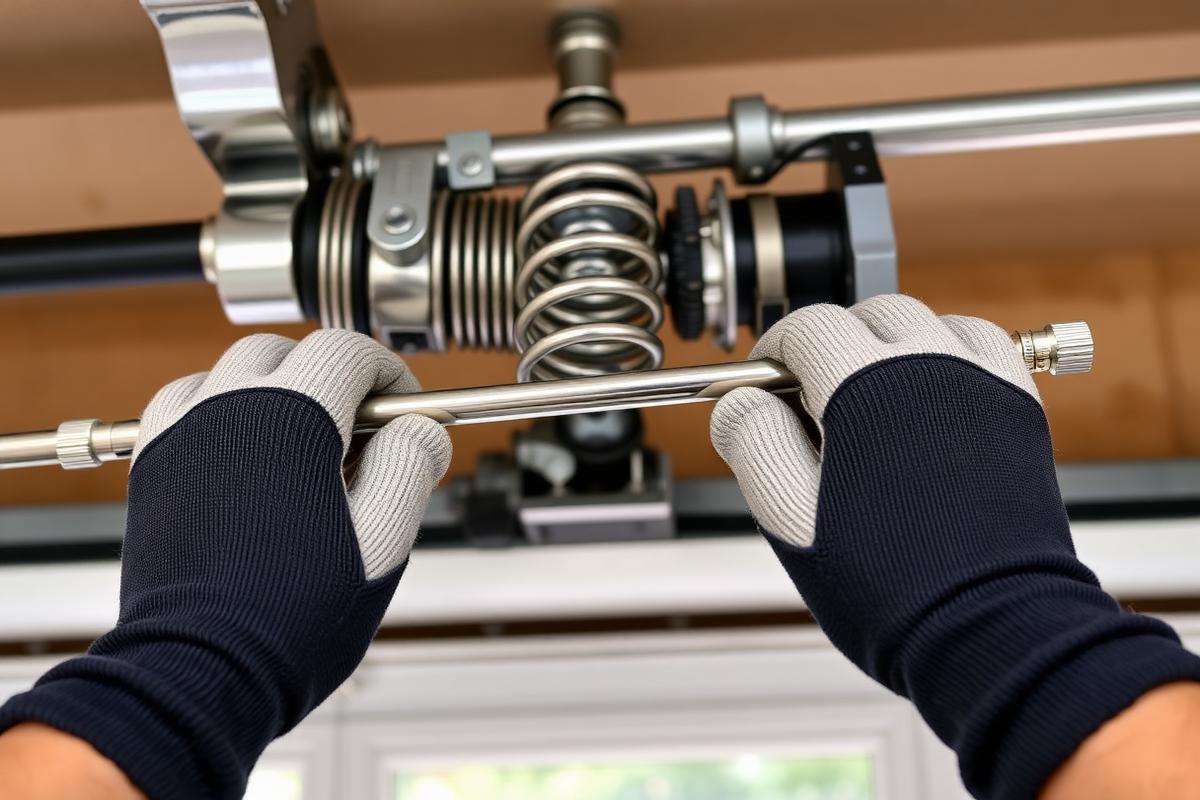
We start by asking what you've noticed and when it started, since the timeline often narrows down the cause before we even open the garage. Then we inspect the springs, cables, tracks, rollers, hinges, and opener as a system, because a garage door only works well when all of those parts are balanced against each other.
Once we've identified the failure, we walk you through the repair options and the reasoning behind them before doing any work. Most repairs, including spring replacement, cable replacement, and opener repair, are completed in a single visit, and we test the door through several full cycles afterward to confirm it opens, closes, and reverses correctly under its own power.
How Florida's Climate Shapes These Repairs
Cape Coral sits close enough to the Gulf and the Caloosahatchee that salt-laden air reaches even homes well inland, and that moisture accelerates rust on springs, tracks, and fasteners in ways that inland shops rarely see at the same pace. Summer humidity also swells wood-composite panels slightly and can make doors bind against weatherstripping that wasn't an issue in the drier months.
Homes built in Cape Coral's older neighborhoods from the 1970s and 80s often still have original hardware that has simply outlasted its expected service life, while newer construction north of Pine Island Road tends to have heavier, wind-rated doors whose springs and openers work harder to lift them. We factor climate and door age into every repair recommendation rather than assuming a one-size-fits-all fix.
Residential and Light Commercial Repair
Most of our repair calls are single-family homes, from canal-front properties with two-car garages to HOA communities with matching door styles, but the same core skills apply to small commercial buildings using residential-style sectional doors, such as offices, retail units, and small warehouses.
Commercial settings often add wear from higher cycle counts, since a business door might open and close dozens of times a day compared to a household's handful of cycles, which is worth mentioning if your door serves a shop or shared parking structure rather than a single home.
When Repair Isn't the Right Call
Occasionally an inspection turns up a door that's been patched multiple times already, has a badly rusted frame, or uses an opener so old that parts are no longer supported, and in those cases we'll say so plainly rather than layering another repair onto a door near the end of its life. We'd rather tell you a replacement will save you money over the next few years than sell a repair we don't believe in.
That said, the majority of the calls we run end with a healthy, properly balanced door rather than a recommendation to replace anything, since most failures are isolated to one or two components.
Preventing the Next Breakdown
A short annual check of the springs, cables, rollers, and opener settings catches most of the wear patterns we've described before they turn into an emergency call. Lubricating moving hardware with a garage-door-specific lubricant a couple of times a year also does a lot to counter the corrosion that Cape Coral's air causes faster than it would elsewhere.
If your door is showing any of the warning signs above, it's worth having it looked at before storm season, when you'll want the door sealed, balanced, and dependable rather than discovering an issue while a system is approaching the coast.
Garage Door Repair questions
- How do I know if my garage door needs a repair or a full replacement?
- If the frame, tracks, and opener are structurally sound and the issue is isolated to a spring, cable, roller, or sensor, repair is usually the right call. Replacement becomes the better option when the door has been repaired repeatedly, the panels are heavily corroded or dented, or the opener is old enough that parts are hard to find.
- Can I use my garage door while waiting for a repair?
- It depends on the problem. A misaligned sensor or noisy roller usually isn't dangerous to keep using briefly, but a door with a broken spring, frayed cable, or one that's off its track should not be opened or closed until it's inspected, since the tension involved can cause sudden, forceful movement.
- Why does my garage door seem worse in the summer?
- Florida's humidity and heat can cause panels to expand slightly and hardware to corrode faster, which shows up as sticking, binding, or new noises that weren't there earlier in the year. Salt air near the coast adds to that corrosion on springs, tracks, and hinges.
- How long does a typical repair visit take?
- Most single-issue repairs, like a spring, cable, or roller replacement, are completed within one to two hours once the technician has diagnosed the problem, assuming the needed parts are on hand.
- Do you repair both the door itself and the opener system?
- Yes. We work on the mechanical components of the door, including springs, cables, tracks, rollers, and panels, as well as the opener, its sensors, remotes, and keypad.