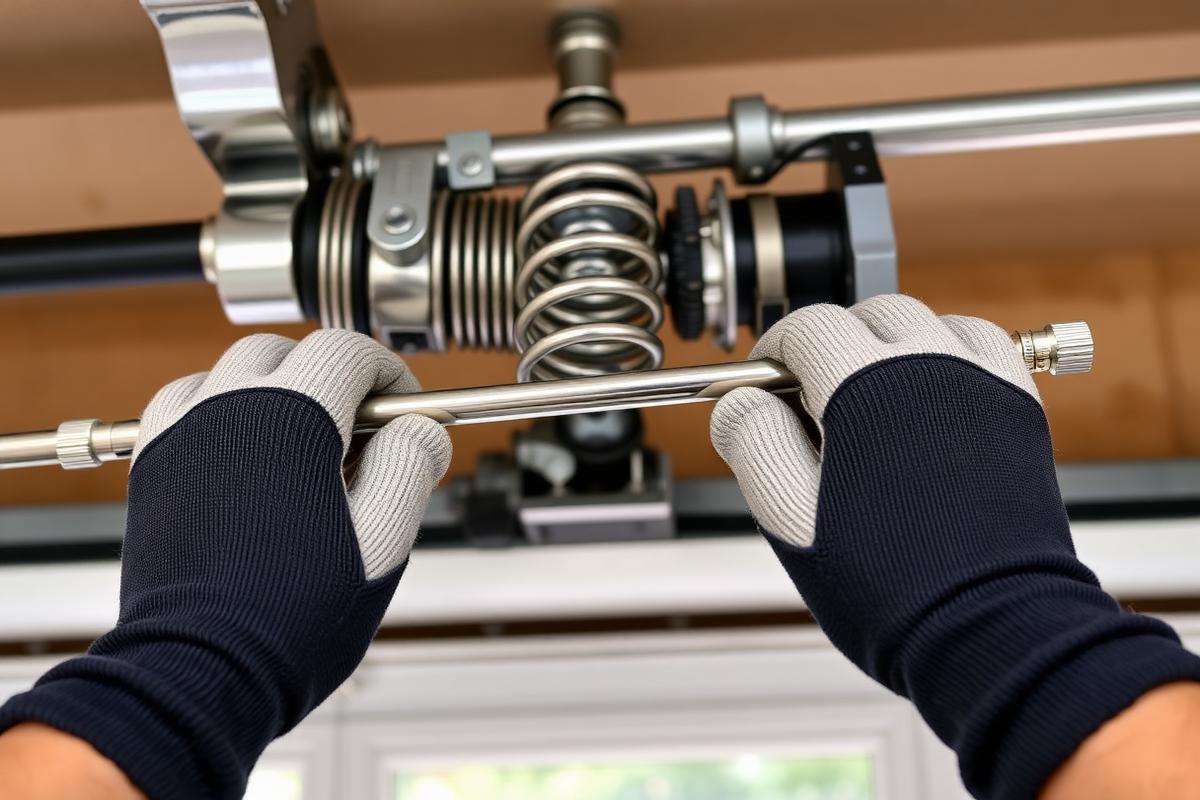
Springs are what actually lift a garage door; the opener just provides a small nudge on top of the lift the springs are already doing. When a spring loses tension, stretches unevenly, or develops a visible gap in its coils, the opener has to work harder than it was designed to, and the door itself becomes harder to lift by hand and less predictable under power.
Spring repair covers more than swapping a broken coil. We check both springs together, since torsion springs are almost always sold and adjusted as a matched pair, inspect the winding cones and center bracket for wear, and confirm the door holds a proper balance afterward so the opener isn't left compensating for a spring that's slightly under- or over-wound.
Torsion Springs vs. Extension Springs
Torsion springs sit on a shaft above the closed door and twist to store energy, which is why most doors built in the last couple of decades use them; they're more durable and safer to service with the right tools than the alternative. Extension springs stretch along the horizontal tracks on either side of the door and are more common on older or lighter doors, particularly in some of Cape Coral's original 1970s and 80s housing stock.
Each type fails differently and needs a different repair approach. Torsion springs typically show a visible gap where a coil has separated, while extension springs tend to stretch out of shape or snap a hook at one end, and safety cables running through extension springs need to be checked any time the spring itself is replaced.
Signs a Spring Is Failing
A door that suddenly feels much heavier to lift by hand, or an opener that strains and moves slowly, are early signs that a spring has lost tension well before it actually breaks. A loud bang from the garage, often described as sounding like a gunshot, is the unmistakable sound of a torsion spring snapping.
Uneven lifting, where one side of the door rises faster than the other, points to one spring being weaker than its pair rather than both failing at the same time. Visible gaps in the coil, rust concentrated on the spring itself, or a door that won't stay open partway are all reasons to have the spring system looked at before it fails completely.
- Door feels noticeably heavier when lifted manually
- Loud bang from the garage followed by a stuck door
- One side of the door rises faster than the other
- Door won't hold a partially open position
- Visible gap or separation in the spring coil
Why We Don't Recommend DIY Spring Work
A torsion spring stores a significant amount of energy even on a standard residential door, and releasing or winding that tension without the correct winding bars and technique is one of the more dangerous DIY jobs a homeowner can attempt. We've been called to finish jobs that started as a DIY repair and stalled partway through with a spring under partial tension, which is an unsafe position to leave a door in.
Beyond the safety issue, springs are sized to a specific door weight, width, and cycle rating, so an incorrectly matched spring will either wear out quickly or leave the opener straining every time it runs.
The Repair Process
We start by measuring the door's current balance and inspecting both springs, the winding cones, center bearing plate, and the cable drums at each end of the torsion shaft, since a worn drum or bent shaft can look like a spring problem at first glance. If a spring needs replacing, we install a properly matched pair rated for your door's weight and cycle expectations, not just a single replacement coil.
After installation we wind the springs to the correct tension, run the door through multiple cycles, and check that it holds still at roughly the halfway point when disconnected from the opener, which is the simplest sign of a well-balanced door.
Spring Life in Cape Coral's Climate
Springs are rated for a cycle count, but humidity and salt air shorten that lifespan by promoting surface rust that weakens the metal faster than dry inland conditions would. Homes closer to the Gulf or canal systems tend to see spring corrosion sooner, even on doors that aren't opened especially often.
Garages that stay warm and humid for long stretches, particularly those without much airflow, also see faster wear on the lubrication that keeps springs coiling smoothly, which is part of why we recommend a periodic lubrication check rather than waiting for a spring to fail outright.
Residential and HOA Considerations
Many Cape Coral HOA communities have matching garage doors installed at the same time, which means springs across a neighborhood can reach the end of their service life in the same general window. If you've heard a neighbor's spring snap recently, it's a reasonable moment to have your own checked, especially if your homes were built around the same time.
For rental and property-management situations, a spring that snaps while a tenant is home can trap a vehicle inside or leave the door impossible to open, so we treat spring repair calls tied to occupied rentals as a priority.
After the Repair: What to Expect
A freshly repaired spring system should make the door feel noticeably lighter to lift by hand and should let the opener move it smoothly without straining or slowing partway through the cycle. We also check the opener's force settings after a spring repair, since those settings are often tuned around the old, weaker spring and need adjusting once proper tension is restored.
If your door was already showing wear on cables, rollers, or the opener itself, we'll flag those during the same visit, since a spring repair is a natural time to address other components that share the load.
Garage Door Spring Repair questions
- Why did my garage door spring break with no warning?
- Springs fail after reaching their rated number of open-close cycles, and that wear happens gradually even if the final break feels sudden. Rust and corrosion, more common in Cape Coral's humid, salt-influenced air, can also weaken a spring faster than its cycle rating alone would predict.
- Do both springs need to be replaced if only one breaks?
- In most cases yes, since springs installed as a pair wear down together, and leaving an old, weaker spring next to a brand-new one puts uneven strain on the door and often leads to a second failure soon after.
- Is it safe to open my garage door manually if the spring is broken?
- Without a working spring, the door's full weight has to be lifted by hand, which is heavy, awkward, and can cause the door to fall suddenly. It's best to leave the door closed and avoid using the opener until the spring is repaired.
- How long does a spring repair take?
- A standard torsion spring replacement typically takes about an hour to ninety minutes, including balancing and testing the door afterward.
- How often should garage door springs be checked?
- An annual visual check and lubrication is reasonable for most homes, with a closer inspection recommended if the door is more than seven or eight years old or if you've noticed any change in how it lifts.