A broken spring has a distinct signature: a loud bang from the garage, followed by a door that either won't budge or feels far too heavy to lift. It's one of the more disruptive garage door problems because it typically happens without warning and immediately takes the door out of service, sometimes with a car trapped inside.
This service is specifically for that moment: the spring has already failed and the door needs a new one, sized and matched correctly, installed and tested the same visit. We treat these as priority calls, since a stuck garage door affects both your daily routine and, in many homes, the security of the house itself.
What a Broken Spring Looks and Sounds Like
Most homeowners describe the moment of failure as a loud bang or pop, loud enough to be startling, often mistaken briefly for something falling or even a gunshot. Afterward, the door either refuses to move at all when the opener is triggered, or it opens a few inches and stalls as the opener strains against the door's full weight.
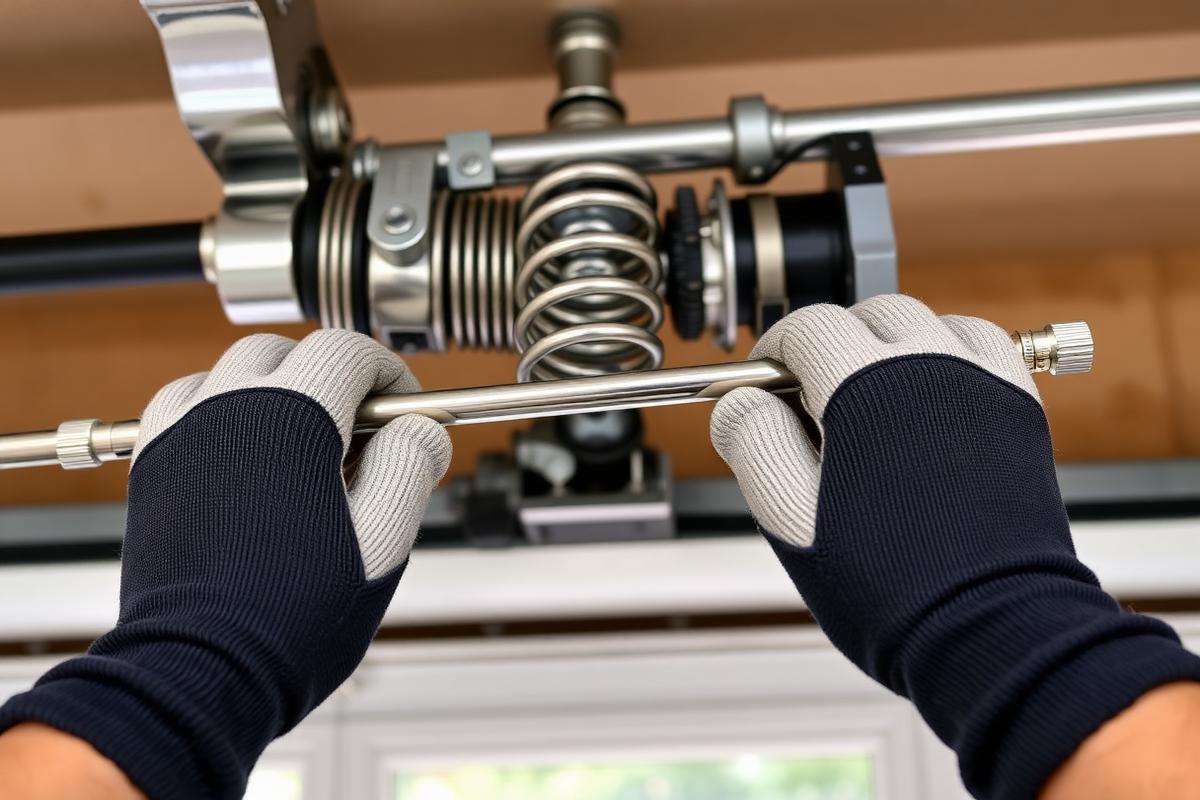
On a torsion spring, you'll usually see a visible gap in the coil where it separated. On an extension spring, the coil may have snapped at one end or pulled loose from its pulley, sometimes with the safety cable the only thing keeping the broken pieces contained.
What to Do (and Not Do) Right After a Spring Breaks
The safest immediate step is to leave the door alone. Don't try to force it open manually, since without the spring's support the door's full weight is unsupported and can drop suddenly. Avoid triggering the opener repeatedly, since doing so can strain the motor or gears trying to move a door they were never meant to lift alone.
If a vehicle is trapped inside, it's understandably frustrating, but forcing the door is more likely to cause injury or additional damage than to get the car out safely. It's better to arrange the repair and, if needed, temporary alternate access, than to attempt a manual lift.
- Do not force the door open by hand
- Do not repeatedly press the opener remote
- Keep children and pets away from the door area
- Note whether you heard the bang and when
- Call for replacement rather than attempting a temporary fix
Matching the Right Replacement Spring
Springs are rated by wire size, coil diameter, length, and wind direction, all of which need to match your door's weight and the shaft configuration already in place. Installing a spring that's close but not correctly matched leads to a door that's hard to lift, an opener that strains, or a spring that wears out again quickly.
We measure your door and, where relevant, the remaining spring or its mounting hardware to select a correctly matched pair, since replacing just the broken side with mismatched tension puts uneven strain on the whole system.
The Replacement Process
After confirming it's safe to work on the door, we remove the broken spring and inspect the torsion shaft, cable drums, center bearing, and end bearing plates for damage, since a spring snapping under tension can sometimes stress these adjacent parts. We then install the new matched pair, wind them to the correct tension for your door's weight, and lubricate the components.
Once installed, we test the door through several full cycles, check that it holds a stable position when partially open, and confirm the opener's travel and force settings are correct for the new spring tension rather than left tuned to the old, failed setup.
Why Replacement Beats a Temporary Patch
There's no reliable way to temporarily patch a broken spring; the coil either holds tension or it doesn't, and a partial fix leaves the door in the same unsafe, unbalanced state. Full replacement with a correctly sized pair is the only way to restore normal, safe operation.
We also don't recommend reusing an old spring alongside a new one, since a spring that's already been through most of its rated cycles is likely to fail again soon, often not long after the visit, which just leads to a second repair call.
Considerations for Cape Coral Homes
Homes near the coast or on canal lots tend to see spring failures somewhat earlier due to accelerated corrosion from salt-carrying air, and we take that into account when discussing expected spring life with homeowners in those areas. Newer, heavier wind-rated doors built north of Pine Island Road also put more load on springs, which is worth factoring in if your door is a recent hurricane-rated install.
For rental properties and HOA-managed homes, we can coordinate scheduling directly with property managers so a stuck door doesn't leave a tenant without garage access for longer than necessary.
After the Visit
A properly replaced spring should make the door easy to lift by hand when disconnected from the opener, and quiet and even when operated normally. We'll also mention the general expected lifespan for the new springs based on typical use, so you have a rough sense of when to expect a future check rather than another surprise failure.
Broken Spring Replacement questions
- Can I drive my car out if the spring just broke and the door won't open?
- It's not safe to force the door open manually to get a car out, since the door's weight is unsupported without a working spring. It's better to arrange replacement and, if the car is needed urgently, consider temporary alternate arrangements rather than forcing the door.
- Will replacing a broken spring damage the opener?
- The opener itself is usually fine, but running it against a door with a broken spring can strain the motor and gears. We check the opener during the visit to make sure it wasn't affected before returning the door to normal use.
- How quickly can a broken spring be replaced?
- Most broken spring replacements are completed in one visit, generally within an hour to ninety minutes once the correct spring pair is confirmed and on hand.
- Is a broken spring covered by garage door warranties?
- That depends on the door and opener manufacturer's specific terms, which vary by brand and purchase date, so it's worth checking your original paperwork if the door or springs are still relatively new.
- Why did the spring break instead of just wearing out gradually?
- Springs typically wear gradually through their rated cycle count, but the actual failure point, the moment the coil separates, does happen suddenly rather than as a slow leak of tension, which is why it can feel unexpected even though the wear was building for a while.