A standard garage door is often the weakest point on a Florida home during a tropical storm or hurricane. Once wind gets behind a door that buckles, pressure can build inside the structure and lift the roof, which is why Lee County enforces strict wind-load standards for anything sold or installed here.
We install hurricane-rated garage doors sized and reinforced to meet the wind-borne debris region requirements that apply across Cape Coral, whether you're replacing an aging door on a 1980s canal home or fitting a new build north of Pine Island Road.
What Makes a Garage Door Hurricane-Rated
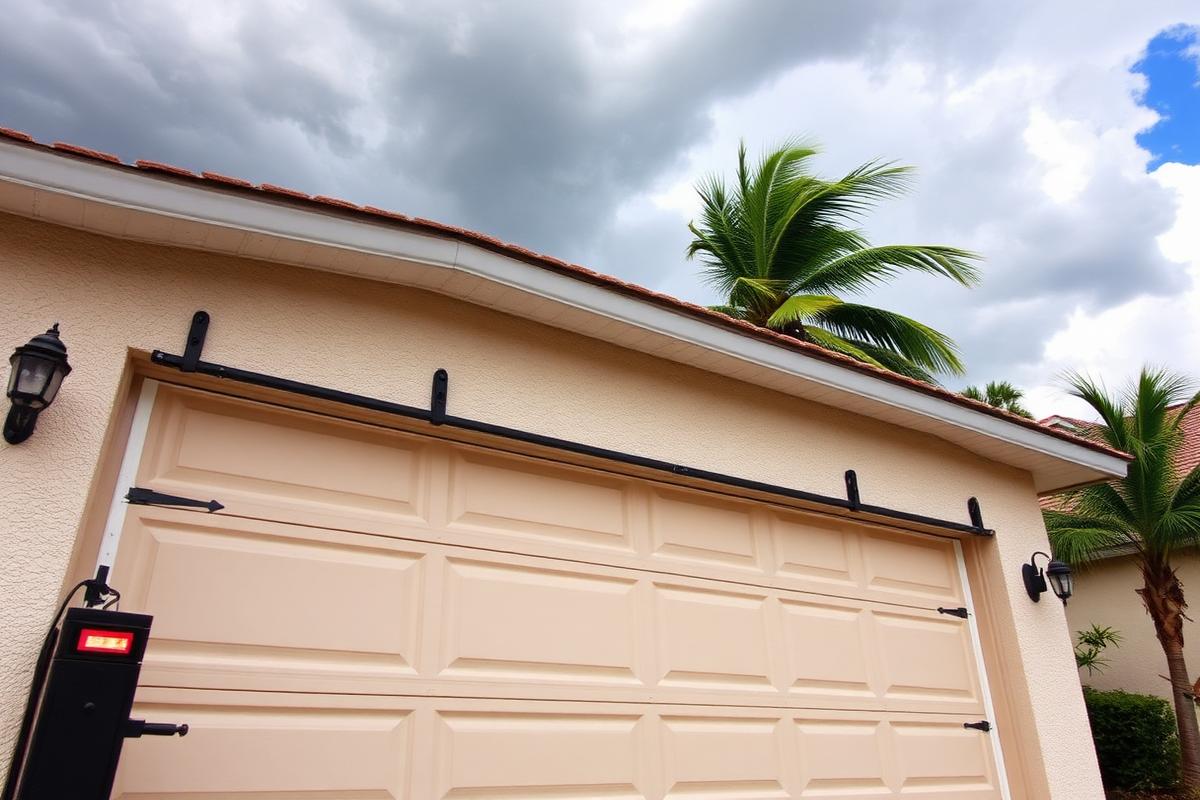
A hurricane-rated door isn't just a heavier panel. It's an engineered system: thicker steel or reinforced panel skins, heavier gauge tracks, closer-spaced end and intermediate hinges, and often a reinforcing strut package bolted horizontally across the back of each panel.
The track and header attachment points are rated to transfer wind pressure into the surrounding structure rather than letting the door flex and separate from its tracks. Every component in the assembly has to work together to carry the load, not just the panels themselves.
Florida Building Code and Wind-Borne Debris Requirements
Lee County sits within the wind-borne debris region of the Florida Building Code, which means garage doors installed here need documented approval for both positive and negative wind pressure, along with impact resistance or an approved shutter system.
When we install a hurricane-rated door, the unit carries a Miami-Dade or Florida Product Approval number specific to its size and configuration. We size the correct approved model for your opening rather than assuming one rating fits every garage.
Choosing the Right Door for Your Home
Coastal and canal-front properties tend to see more direct wind exposure, while inland homes still fall under the same code but may have slightly different pressure ratings depending on exposure category and roof height.
We walk through door material, insulation, window options, and finish with you, then match those preferences to a product line that has an approved rating for your specific opening size.
- Steel doors with reinforced backing struts
- Insulated sandwich-construction panels for added rigidity
- Reinforced tracks and heavier gauge hardware
- Impact-rated glass inserts where windows are wanted
The Installation Process
We remove the existing door and inspect the opening, header, and jambs for wood rot or corrosion before setting the new unit, which matters on older Cape Coral homes where framing has had decades of humidity exposure.
Tracks are plumbed and fastened per the manufacturer's engineering, springs are set to the correct cycle count for the heavier door weight, and the opener is tested against the new balance point before we walk you through operation.
New Construction vs. Replacement Installs
New construction north of Pine Island Road typically already has an opening sized for a code door, which simplifies the install. Older homes sometimes have openings, headers, or electrical that need minor adjustment to accept a heavier reinforced door.
We flag those issues during the estimate so there are no surprises on install day, whether the job is a straightforward swap or requires header reinforcement first.
Residential and Commercial Applications
Homeowners most often need this for a two-car garage on a primary residence or seasonal property, but the same wind-load logic applies to detached garages, workshops, and small commercial bays that fall within the same code region.
We size hurricane-rated doors for both applications and can coordinate with property managers or HOAs on documentation for permitting.
Maintaining a Hurricane-Rated Door
A reinforced door still needs the same seasonal attention as any garage door — lubricated rollers, tight hardware, and a balance check — because a door that's out of adjustment won't perform to its rated pressure during an actual storm.
We recommend a pre-hurricane-season inspection so any wear is caught before June, not after a named storm is already in the forecast.
Hurricane Garage Door Installation questions
- Do I need a permit to install a hurricane-rated garage door in Cape Coral?
- Yes, garage door replacement in Lee County typically requires a permit since the door is part of the wind-load envelope of the home. We can provide the product approval documentation your permit application needs.
- Can I keep my existing opener with a new hurricane-rated door?
- Sometimes, but reinforced doors are heavier, so we check your opener's horsepower and drive type against the new door weight before reusing it.
- What wind speed are these doors rated for?
- Rated pressures vary by door size and model rather than a single wind-speed number, which is why we match the specific approved product to your opening dimensions.
- How is this different from adding reinforcement to my current door?
- Installation replaces the whole door and track assembly with an engineered, code-approved system, while reinforcement adds bracing to an existing door that wasn't originally built to that standard.
- Does a hurricane-rated door cost more to maintain?
- Routine maintenance is similar to a standard door — the difference is mainly in the heavier hardware, which we account for during tune-ups.