Common Garage Door Problems in Cape Coral
The Most Common Garage Door Problems Cape Coral Homeowners Face
Published February 10, 2026
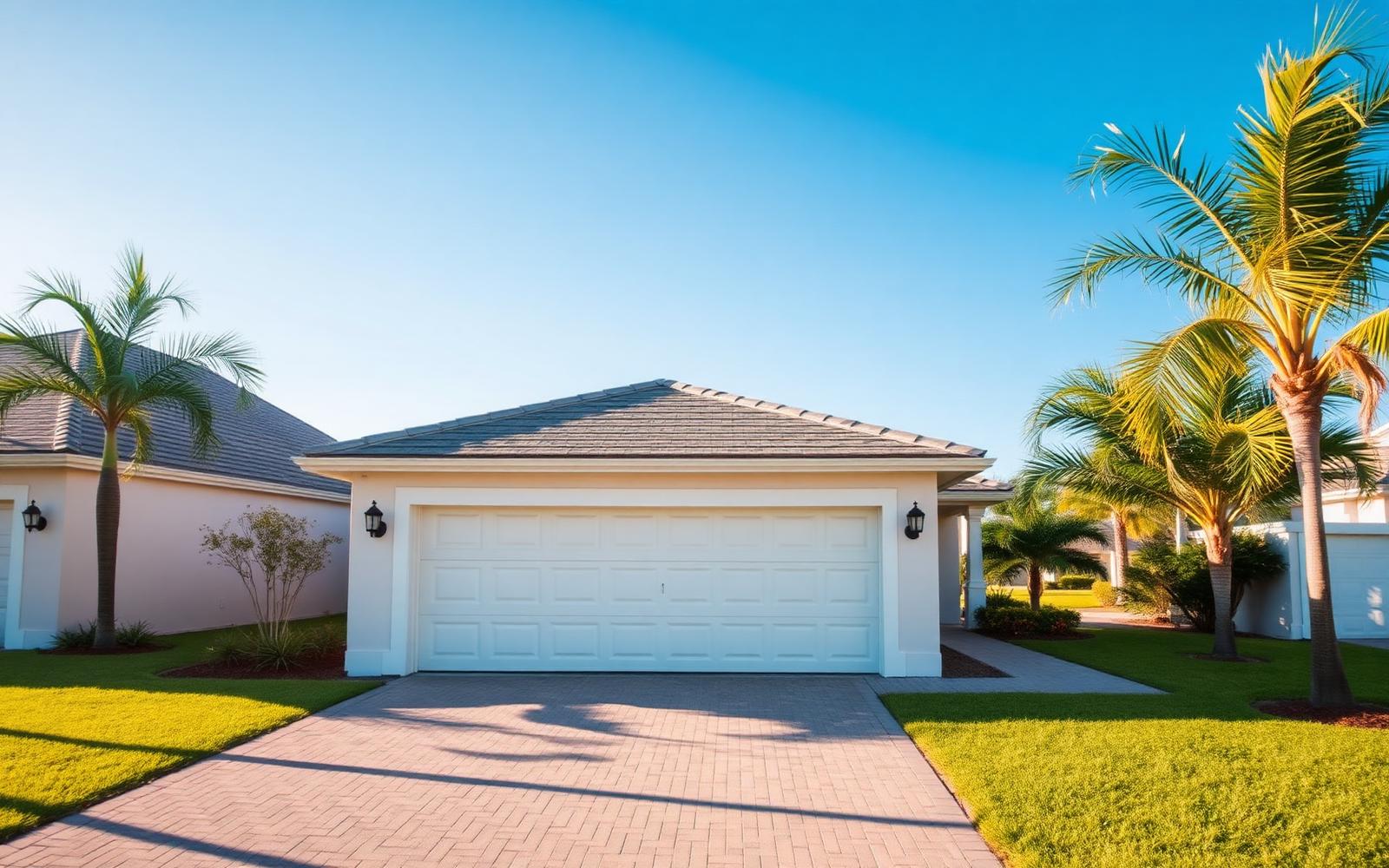
Why Cape Coral Garages Wear Differently
Cape Coral has one of the largest canal networks in the country, and that means a huge share of homes sit close to brackish water. Salt-laden air drifts inland on the breeze off the Caloosahatchee and the Gulf, settling on metal surfaces long before most homeowners notice any visible rust. Garage doors, being large exterior assemblies full of steel hardware, take the brunt of it.
Add in the region's intense humidity and summer heat, and you get a climate that accelerates wear on springs, rollers, tracks, and openers faster than in drier parts of the country. Homes built in the 1970s and 80s south of Pine Island Road often still carry original hardware that was never designed for this level of exposure.
Corroded Springs and Hardware
Torsion and extension springs are made of tightly wound steel wire under enormous tension, and that wire is vulnerable to surface rust. Even a light coating of corrosion changes how the coils flex against each other, creating friction points that weaken the metal unevenly. Over time this leads to sudden failure rather than a gradual, predictable decline.
Bolts, hinges, and the galvanized coating on tracks can also pit and flake in coastal air, which is why we routinely find hardware failing years before the manufacturer's expected lifespan in similar inland climates.
Misaligned Tracks and Rollers
Cape Coral's sandy soil and the seasonal expansion and contraction of concrete slabs can very gradually shift a garage's framing. That subtle movement is enough to nudge tracks out of alignment over several years, especially on older homes that have settled.
Rollers exposed to gritty air and humidity also wear unevenly, and nylon rollers can become brittle in direct summer sun where a door faces west. The result is a door that binds, drags, or pops off track intermittently before it fails completely.
Opener Sensor and Circuit Board Issues
Humidity doesn't just affect big steel parts — it gets into small electronic components too. Photo-eye sensors mounted low near the floor are prone to moisture intrusion and fogging, and circuit boards in openers can suffer from condensation during Southwest Florida's swing seasons when temperature and humidity change quickly overnight.
We also see openers that short out after a hard summer storm, particularly in homes without surge protection on that circuit.
Weatherstripping Breakdown
The rubber seal along the bottom of a garage door is constantly exposed to UV rays and heat radiating off driveways. In Cape Coral it tends to dry out, crack, and lose its shape faster than it would farther north, letting in wind-driven rain during afternoon thunderstorms.
Once that seal fails, water intrusion can start affecting the bottom of the door panel itself, especially on steel doors where trapped moisture promotes rust from the inside out.
Noisy Operation
A grinding, popping, or rattling garage door is rarely just cosmetic. It's usually a sign that rollers, hinges, or the opener's drive mechanism are dry, worn, or slightly misaligned. In salt air, a lack of regular lubrication accelerates friction-related noise because corrosion adds texture to metal surfaces that should glide smoothly.
Storm-Related Track and Panel Damage
Southwest Florida's summer thunderstorm pattern brings sudden gusts and wind-driven debris that can dent panels or knock a track slightly out of true, even without a full hurricane making landfall. A single strong gust hitting an open or partially open door can be enough to bend a track section, and homeowners sometimes don't notice the resulting drag until the door starts binding weeks later.
Palm fronds, loose lawn furniture, and debris carried by wind are common culprits we see after a rough storm season, and a quick post-storm walk-around of the door and tracks is a good habit for anyone in a canal-front or open-lot property.
Rental Properties and Seasonal Homes
Cape Coral has a large population of seasonal residents and investment properties that sit empty or lightly used for months at a time. A garage door left unused through a hot, humid summer can develop stiffness in the springs and rollers simply from inactivity combined with heat, and lubricant that would normally get worked in through regular cycling instead sits static and can gum up or dry out.
Property managers overseeing multiple units benefit from a scheduled check-in rather than waiting for a tenant or returning owner to report a problem, since a door that hasn't moved in months is more likely to need attention the first time it's used again.
Preventive Habits That Actually Help
Most of the problems described above share a common thread: they get more expensive and more disruptive the longer they go unaddressed. A handful of simple habits go a long way toward catching issues while they're still minor.
- Walk around the door after major storms to check for dents or track shifts
- Wipe down visible hardware for early rust every couple of months
- Test the door manually with the opener disconnected to feel for balance changes
- Keep photo-eye sensors clean and unobstructed
- Schedule a professional check-up if a seasonal home has sat empty for months
When to Call a Professional
Some of these issues are easy to catch early with a simple visual check — surface rust on springs, a sagging seal, or a door that shudders on its way up. Others, like a subtly bent track or a failing circuit board, are harder for a homeowner to diagnose safely.
If your door is misbehaving in more than one of these ways at once, it's worth having a technician inspect the whole system rather than patching a single symptom.
Related questions
- Why do garage doors near canals fail faster in Cape Coral?
- Brackish water and salt-laden air accelerate corrosion on steel hardware, springs, and tracks, which shortens their functional lifespan compared to inland homes.
- How often should I inspect my garage door hardware here?
- Given the coastal climate, a visual check every few months and a professional tune-up at least once a year helps catch corrosion and misalignment early.
- Can humidity really affect my garage door opener?
- Yes, moisture can affect circuit boards and photo-eye sensors, leading to intermittent failures that seem electrical but trace back to environmental exposure.
- Is a noisy garage door always a spring problem?
- Not always. Noise can come from dry rollers, loose hinges, worn opener gears, or a slightly bent track, so it's worth having the whole system checked.
- Should I replace weatherstripping myself?
- Basic bottom seals can often be replaced by a confident homeowner, but if water intrusion has reached the panel itself, a professional assessment is safer.
Keep reading
Garage doors rarely fail without warning. Here are the sounds, movements, and small changes that mean it's time to call for a repair.
How Florida Humidity Affects Garage DoorsSouthwest Florida's year-round humidity affects nearly every part of a garage door system, often in ways that aren't obvious until something fails.
Garage Door Maintenance TipsA little routine attention goes a long way in a climate this tough on hardware. Here's what actually makes a difference for Cape Coral garages.