Hurricane-Rated Garage Doors in Florida
What Makes a Garage Door Hurricane-Rated in Florida
Published May 14, 2026
Why the Garage Door Matters So Much in a Storm
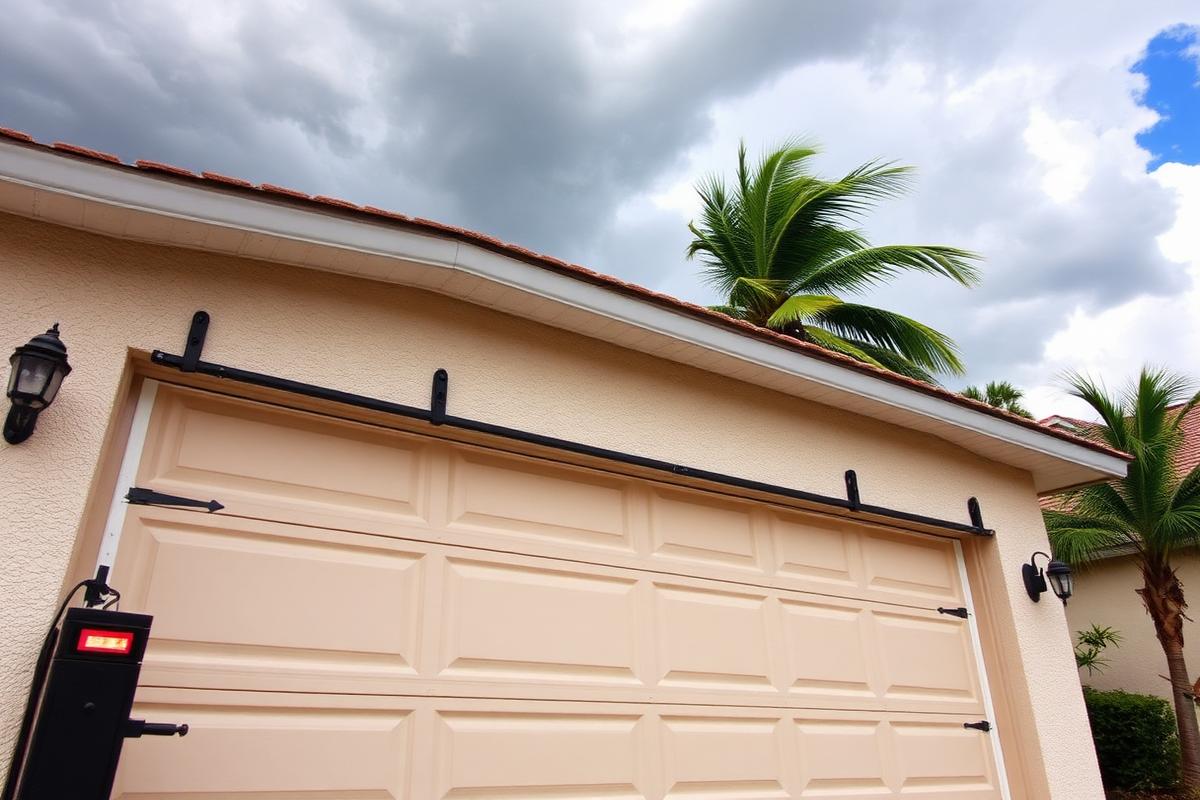
A garage door is the largest moving opening on most homes, and if it fails during high winds, the sudden pressure change inside the garage can put stress on the roof structure that leads to much more extensive damage. This is one of the reasons Florida Building Code pays specific attention to garage doors in wind-borne debris regions, which includes all of Lee County.
Understanding Wind-Load Ratings
A hurricane-rated door is engineered and tested to withstand specific positive and negative pressure loads without collapsing or bowing inward or outward. These ratings are typically expressed in pounds per square foot and vary depending on a home's wind zone, height, and exposure category, which is why a door that's adequate in one part of the region might not meet requirements in another.
Reinforced Panels and Track Bracing
Hurricane-rated doors typically use thicker gauge steel, additional internal reinforcement ribs, and stronger end stiles compared to standard doors. The tracks are often heavier and mounted with additional anchoring points into the surrounding structure, since track failure under wind pressure is a common way non-rated doors give way.
Impact Resistance for Wind-Borne Debris
Beyond wind pressure alone, code in this region also accounts for impact from wind-borne debris, meaning a hurricane-rated door needs to resist penetration from flying objects during a storm, not just steady wind loads. This is tested separately from pressure resistance and is part of why certified hurricane doors carry a specific product approval number.
Reinforcement Kits as an Alternative
For homeowners who aren't ready for a full door replacement, aftermarket bracing kits can reinforce an existing door to improve its wind resistance, though the result generally isn't equivalent to a door engineered and tested as a complete hurricane-rated unit. These kits add horizontal struts and stronger end brackets and can be a reasonable interim step for some homes.
New Construction vs. Older Cape Coral Homes
Homes built north of Pine Island Road in recent years are generally required to meet current wind-load code from the start. Many older homes south of Pine Island Road, built well before these standards existed, still have original doors that don't meet current requirements, which is worth factoring into any renovation or replacement planning.
Insurance Considerations Worth Asking About
Some homeowners insurance policies in wind-borne debris regions offer discounts or credits for homes with wind-rated openings, including hurricane-rated garage doors. It's worth asking your insurance provider directly whether upgrading the garage door could affect your premium, since the answer varies by carrier and policy.
Fitting Into a Broader Storm Prep Plan
A hurricane-rated garage door works best as part of a coordinated approach to storm readiness that also includes impact-rated windows or shutters, secured roofing, and a clear plan for outdoor items that could become debris. Addressing the garage door in isolation still helps, but homeowners doing a fuller storm-hardening project often tackle it alongside these other vulnerable points at the same time.
Commercial and Roll-Up Doors Face the Same Code
Wind-load and impact requirements aren't limited to residential garage doors — commercial roll-up doors on warehouses, retail bays, and light industrial buildings in Lee County are subject to similar Florida Building Code provisions. Business owners evaluating an aging roll-up door should factor wind-load compliance into that decision the same way a homeowner would for a residential door.
What to Look for When Choosing One
Ask about the door's specific wind-load rating relative to your home's location and exposure, confirm it has a valid Florida product approval number, and make sure installation includes correctly rated track hardware and anchoring — a hurricane-rated door installed with standard tracks won't perform as designed.
Related questions
- Is a hurricane-rated garage door required by code in Lee County?
- Requirements depend on when the home was built and its wind zone, but new construction generally must meet current Florida Building Code wind-load standards, which includes garage doors.
- Can I add reinforcement to my existing door instead of replacing it?
- Bracing kits can improve an existing door's wind resistance, but they generally don't provide the same tested performance as a door engineered as a complete hurricane-rated unit.
- What's the difference between wind-load rating and impact resistance?
- Wind-load rating measures how much sustained pressure a door can withstand, while impact resistance measures its ability to resist penetration from flying debris during a storm.
- Do hurricane-rated doors cost significantly more?
- They typically cost more than standard doors due to reinforced materials and testing, though the added protection is often worth it for homes in higher wind zones.
- Does installation affect whether a hurricane door performs as rated?
- Yes, correct track hardware and anchoring are essential — a hurricane-rated panel installed with standard tracks will not perform to its tested rating.
Keep reading
Garage doors are one of the largest openings on a home's exterior, and when they fail during high winds, the pressure change can cause serious structural damage.
Garage Door Repair vs. ReplacementNot every garage door problem calls for full replacement, but some situations make repair a temporary fix at best. Here's how to think it through.
Choosing a New Garage Door for Your Cape Coral HomeReplacing a garage door in Cape Coral means balancing curb appeal against wind codes, humidity, and the realities of a coastal Florida climate.