Garage Door Cable Problems Explained
Understanding Garage Door Cable Failures
Published March 2, 2026
What garage door cables actually do
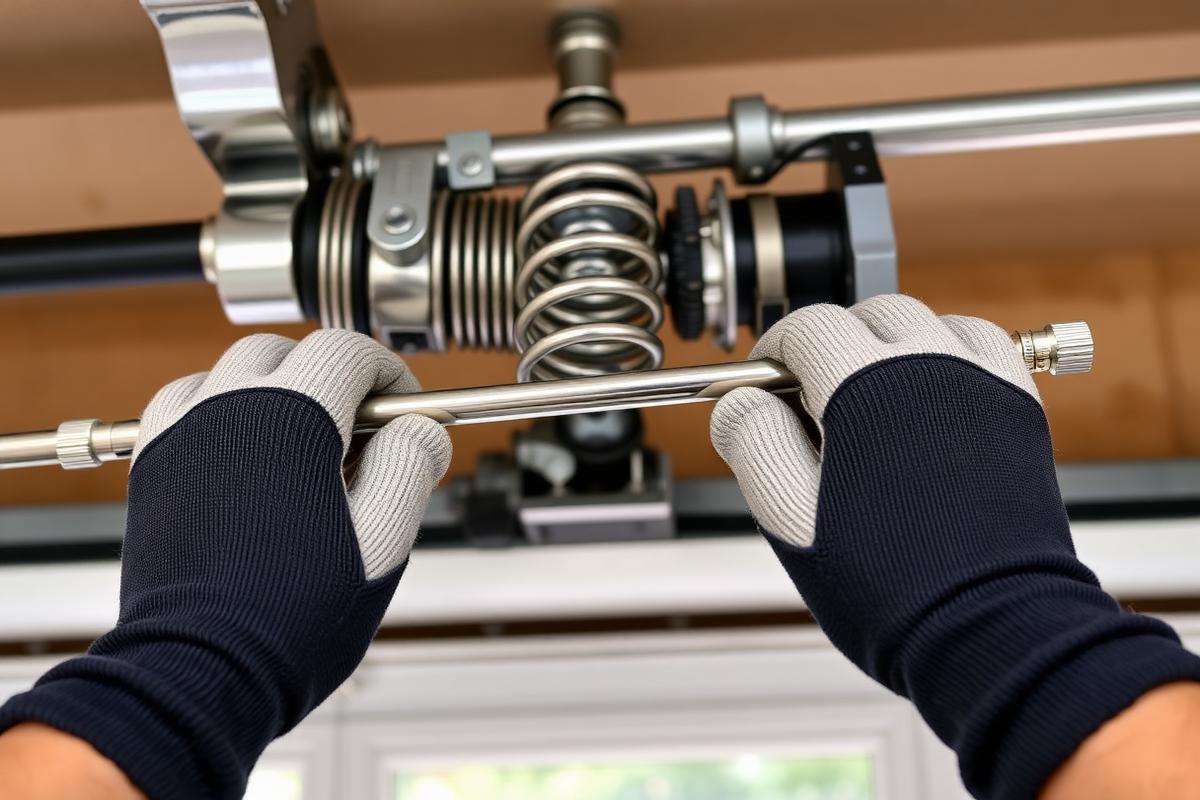
Most residential garage doors use a pair of steel cables that run from the bottom corner brackets up to drums mounted on the torsion spring shaft. As the springs unwind and rewind, the cables spool onto and off the drums, controlling how the door's weight transfers through the system.
Because the cables work in tandem with the springs under constant tension, a problem with one often shows up as a problem with the other — which is part of why cable issues can be confusing for homeowners trying to diagnose a door that suddenly won't behave.
Common cable failure modes
Fraying is the most visible sign of wear: individual strands of the cable start to separate and stick out, usually near the bottom bracket or where the cable wraps the drum. A frayed cable is not a repaint job — it needs replacement before it snaps under load.
Cables can also jump off the drum entirely, often after an impact to the door or a spring imbalance that lets one side of the door drop faster than the other. When a cable comes off track, the door usually hangs crooked or refuses to move evenly.
- Fraying or broken strands
- Cable slipping off the drum
- Loose or rusted cable at the bottom bracket
- Uneven door movement on one side
What causes cables to wear out early
Humidity and salt exposure common in Lee County accelerate rust on cable strands the same way they do on springs and hinges, weakening the cable from the inside even when the outer strands look intact. Doors that are frequently out of balance also put uneven load on one cable, wearing it faster than its counterpart.
Impact damage — a car bumper tap, a basketball, or storm debris — can nick a cable or bend a bottom bracket, creating a weak point that fails later under normal operation rather than at the moment of impact.
Why a snapped cable is dangerous
When a cable breaks while the door is in motion or resting in an unbalanced position, the door can drop suddenly and unevenly, sometimes coming off the track entirely. Because the cable is directly tied to spring tension, attempting to remove or replace one without releasing that tension safely is one of the more dangerous DIY garage door mistakes homeowners make.
Diagnosing the problem versus fixing it
Homeowners can safely do the diagnosis part: look at the cables near the bottom brackets and drums for fraying, rust, or slack, and note whether the door is sitting level or leaning to one side. That visual check helps a technician arrive prepared, but the actual repair involves controlling spring tension with winding bars, which should be left to someone trained to do it safely.
Cable repair and what to expect
A proper cable replacement includes checking the drums for wear, verifying the door's balance point, and replacing both cables as a pair even if only one shows damage, since the other has usually seen the same age and conditions. Technicians also check the bottom brackets and rollers at the same time, since problems in one area often point to related wear nearby.
How cable wear differs from spring wear
Springs tend to fail from metal fatigue after a predictable number of open-and-close cycles, while cables more often fail from abrasion, corrosion, or a specific incident like an impact or a jammed roller. That means a cable can look fine for years and then develop a problem fairly quickly once a nick or a patch of rust takes hold, rather than wearing down gradually and predictably the way a spring does.
Because of this difference, cable inspections benefit from a close visual look rather than relying on cycle counts or age alone to predict when replacement is due.
Residential versus larger door cable setups
A standard two-car residential door usually uses two cables of matched length and gauge, one on each side, sized for that specific door's weight and spring configuration. Heavier insulated doors or oversized openings sometimes use higher-gauge cable to handle the additional load, which is one more reason cable replacement should match the original specification rather than using a generic substitute.
Preventing premature cable wear
Keeping the door properly balanced reduces uneven strain on the cables, since an out-of-balance door forces one cable to carry more of the load than it was designed for. Periodic lubrication of the drum area, along with prompt attention to any roller or track issue that could cause the door to bind, helps keep cable wear even and predictable across both sides.
Homeowners who notice a door that has started drifting slightly off level, even if it still opens and closes, are often catching an early cable or balance issue before it turns into a snapped cable and a stuck door.
How cable wear differs from spring wear
Springs tend to fail from metal fatigue after a predictable number of open-and-close cycles, while cables more often fail from abrasion, corrosion, or a specific incident like an impact or a jammed roller. That means a cable can look fine for years and then develop a problem fairly quickly once a nick or a patch of rust takes hold, rather than wearing down gradually and predictably the way a spring does.
Because of this difference, cable inspections benefit from a close visual look rather than relying on cycle counts or age alone to predict when replacement is due.
Residential versus larger door cable setups
A standard two-car residential door usually uses two cables of matched length and gauge, one on each side, sized for that specific door's weight and spring configuration. Heavier insulated doors or oversized openings sometimes use higher-gauge cable to handle the additional load, which is one more reason cable replacement should match the original specification rather than using a generic substitute.
Preventing premature cable wear
Keeping the door properly balanced reduces uneven strain on the cables, since an out-of-balance door forces one cable to carry more of the load than it was designed for. Periodic lubrication of the drum area, along with prompt attention to any roller or track issue that could cause the door to bind, helps keep cable wear even and predictable across both sides.
Homeowners who notice a door that has started drifting slightly off level, even if it still opens and closes, are often catching an early cable or balance issue before it turns into a snapped cable and a stuck door.
Related questions
- Can I replace a garage door cable myself?
- It's not recommended. Cables are under spring tension, and releasing that tension safely requires the right tools and technique to avoid injury.
- Should both cables be replaced if only one is frayed?
- Usually yes, since both cables experience similar age and wear, and replacing just one often means doing the job again soon after.
- Why did my cable jump off the drum after a storm?
- Wind pressure or debris impact can throw the door briefly out of alignment, letting a cable unspool unevenly and slip off its drum.
- Is a crooked garage door always a cable problem?
- Not always — it can also be a spring or track issue — but a visibly slack or frayed cable on one side is a strong indicator.
Keep reading
Torsion and extension springs work harder in Southwest Florida than almost anywhere else in the country. Here's what's actually happening to the metal.
Garage Door Won't Open: Common CausesA stuck garage door is one of the most common calls we get. Here's a rundown of what's usually behind it, from the simple to the serious.
Signs Your Garage Door Needs RepairGarage doors rarely fail without warning. Here are the sounds, movements, and small changes that mean it's time to call for a repair.