Why Garage Door Springs Break in Florida
Why Garage Door Springs Break Faster in Florida's Climate
Published February 24, 2026
Springs Do the Heaviest Work on Your Door
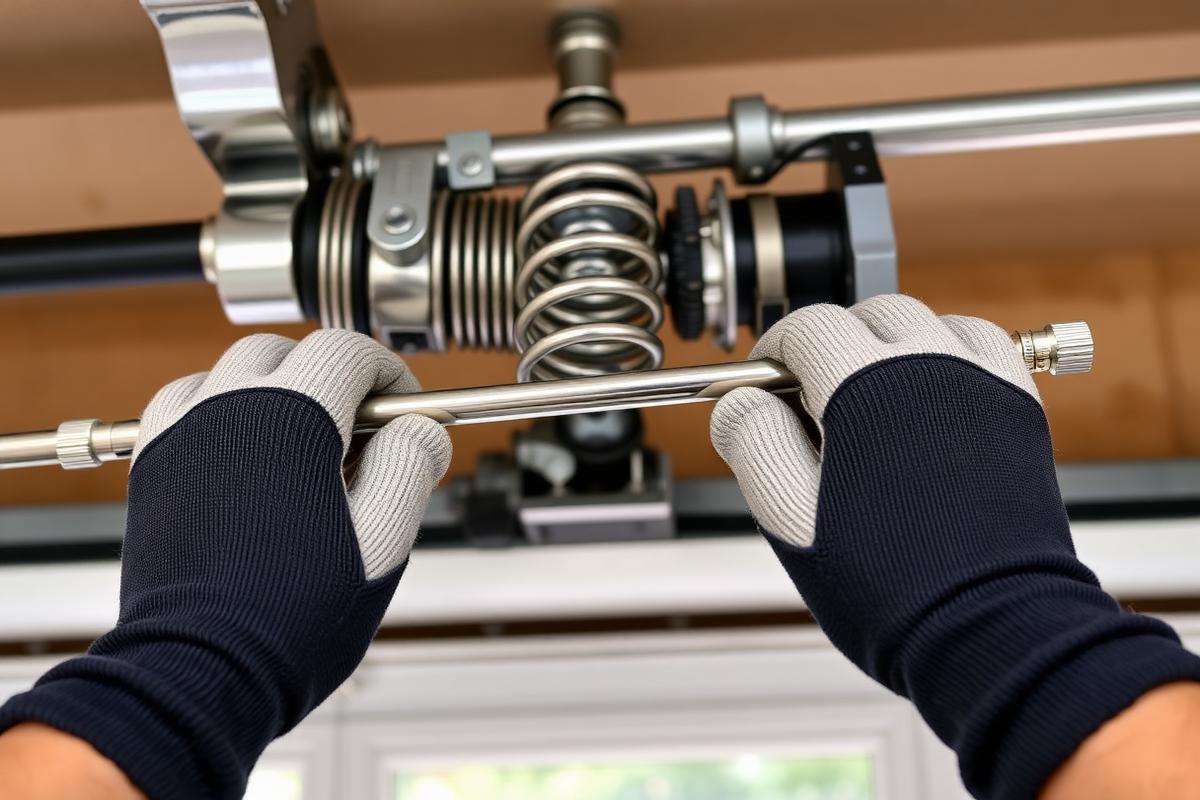
A typical residential garage door weighs well over 100 pounds, and it's the springs — not the opener — that do almost all the lifting. Torsion springs mounted above the door, or extension springs running along the horizontal tracks, store mechanical energy by twisting or stretching tightly wound steel wire.
Every open-and-close cycle puts that wire through a fatigue cycle, similar to bending a paperclip back and forth. Eventually the metal weakens at a molecular level regardless of climate, but Florida conditions speed that process along in specific ways.
Heat Changes How Steel Behaves
Steel expands slightly as it heats and contracts as it cools, and a garage that bakes in direct Florida sun through the afternoon can see real temperature swings inside the space where the spring is mounted. That constant micro-expansion and contraction adds stress on top of the normal mechanical fatigue from daily use.
Extreme heat can also degrade the thin oil coating manufacturers apply to spring wire, which is meant to reduce internal friction between coils as the spring winds and unwinds.
Humidity and Salt Accelerate Corrosion
Once that protective coating breaks down, humid air reaches bare steel. Surface rust, even light rust that isn't visibly obvious, creates uneven pitting on the wire. Pitted metal concentrates stress at those tiny weak points every time the spring cycles, which is a common reason springs snap without much warning.
In neighborhoods close to canals or the Gulf, airborne salt makes this worse by drawing moisture to the metal surface even on days that don't feel especially humid.
Cycle Count Still Matters Most
Manufacturers rate most standard torsion springs for around 10,000 cycles, with one cycle being a full open-and-close. A household that opens the garage four times a day will reach that number years sooner than a household that opens it once. Florida's climate shortens the timeline further, but usage patterns remain the single biggest factor in how long a spring will realistically last.
Warning Signs Before a Spring Fails
A door that feels heavier than usual when lifted manually, a visible gap in the coils of a torsion spring, or a loud bang from the garage are all signs a spring is at or near failure. Sometimes homeowners notice the door closing crooked, with one side dropping faster than the other, which points to an extension spring that has already given out.
Why This Is Not a DIY Repair
A wound torsion spring stores enough energy to cause serious injury if it releases uncontrolled, and the winding bars used to adjust tension require specific technique and the right tools. Attempting to replace or adjust a spring without proper training is genuinely dangerous — this is one of the few home repairs we strongly recommend leaving to a trained technician every time.
Cables under the same tension system carry similar risk; a frayed or snapped cable can whip violently and should never be handled without the door properly secured first.
Heavier Doors Put Extra Strain on Springs
Insulated steel doors and hurricane-rated doors are meaningfully heavier than a standard single-layer panel door, which means the springs supporting them are sized to handle more force with every cycle. A spring that's correctly matched to a heavier door will still wear over time, but a spring that's undersized for the door's actual weight fatigues far faster and can fail well ahead of its expected cycle count.
This is one reason it matters that spring replacement accounts for the specific door installed, not just a generic size — a mismatch that goes unnoticed can shorten the life of a brand-new spring dramatically.
What Happens the Moment a Spring Lets Go
When a torsion spring finally snaps, the release of stored tension is sudden and can be startling — a loud bang that many homeowners describe as sounding like a gunshot from inside the garage. The door itself typically becomes very difficult or impossible to lift by hand at that point, since the spring was doing nearly all the mechanical work of countering the door's weight.
If this happens while the door is partway open, it can drop suddenly rather than staying in place, which is part of why we recommend keeping people and vehicles clear until a technician has assessed the situation.
Extending Spring Life in a Florida Garage
Regular lubrication with a silicone-based spray formulated for garage door springs helps replace the protective coating that heat and time wear away. Keeping the garage reasonably ventilated to reduce trapped humidity, and having springs inspected during an annual tune-up, both help catch pitting or uneven wear before it becomes a sudden failure.
Related questions
- Is it normal for garage door springs to rust in Florida?
- Light surface rust is common given the humidity and salt air, and it's one reason springs here often need replacement sooner than the manufacturer's general estimate.
- Can I lubricate my own garage door springs?
- Yes, applying a silicone-based lubricant to the coils is a safe homeowner task and helps slow corrosion, as long as you don't attempt to adjust the spring's tension.
- Why did my spring break with no warning?
- Torsion springs typically fail suddenly once fatigue and corrosion reach a critical point, even if the door seemed to be working normally right up until it happened.
- Are torsion springs more dangerous than extension springs?
- Both store significant energy under tension. Torsion springs are generally considered higher risk because of how much force they release at once, but neither should be handled without training.
- How can I tell which type of spring my door has?
- Torsion springs sit on a metal bar directly above the closed door, while extension springs run along the upper horizontal tracks on either side.
Keep reading
Manufacturers publish cycle ratings, but real-world lifespan in Cape Coral depends on usage, spring type, and how much salt air your garage sees.
Garage Door Cable Problems ExplainedCables do the quiet, unglamorous work of guiding your garage door's weight safely, and when they start to fail, the warning signs are easy to miss until the door won't move at all.
Garage Door Safety Checklist for HomeownersA garage door is one of the largest, heaviest moving objects in most homes, and a few minutes of regular checking can prevent the kind of failure that leads to injury or costly damage.