How Salt Air Damages Garage Door Hardware
Salt Air Corrosion and Your Cape Coral Garage Door
Published February 20, 2026
Why Cape Coral air is harder on metal
Cape Coral sits on a network of canals connected to the Caloosahatchee River and, ultimately, the Gulf of Mexico, which means airborne salt particles travel much farther inland than people assume. Wind off the water carries fine salt mist that settles on exterior metal surfaces, including garage door tracks, hinges, springs, and rollers.
Unlike a rainstorm that rinses a surface and moves on, salt residue stays behind after the moisture evaporates, leaving a thin film that continues to draw humidity out of the air. That cycle of wetting and drying is what accelerates oxidation on hardware that would otherwise last for years in a drier inland climate.
The hardware most at risk
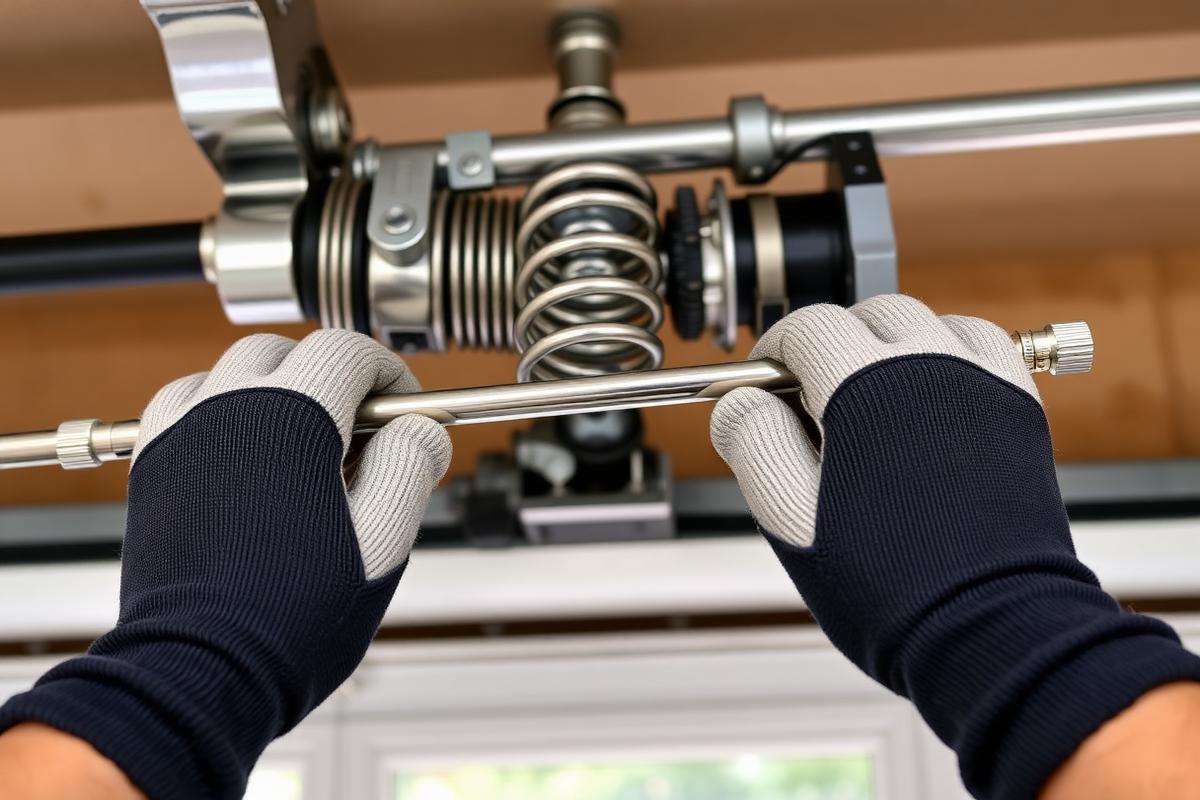
Torsion springs are especially vulnerable because they're wound tightly and coated in a factory finish that can wear thin at the points where coils rub against each other during daily cycling. Once that coating is compromised, rust can form between coils where it's hard to see until the spring is already weakened.
Track brackets, hinges, and roller stems mounted low on the door or near vents are also exposed to more direct airflow and moisture. Galvanized and zinc-coated parts resist corrosion longer than plain steel, but no residential-grade hardware is fully immune in a coastal setting.
- Torsion and extension springs
- Steel hinges and roller stems
- Track brackets and mounting bolts
- Cable ends and drums
What early corrosion looks like
Look for a dull, reddish-orange bloom on spring coils, flaking paint on track brackets, or a gritty white residue on hinges that doesn't wipe away easily. Doors that used to open silently but now squeak or grind at certain points in the cycle are often telling you that corrosion has roughened a moving surface.
Rust that appears only on the surface can usually be addressed with cleaning and lubrication, but pitting — small craters in the metal — signals deeper damage that weakens the part structurally rather than just cosmetically.
How corrosion leads to bigger failures
A pitted spring loses tensile strength unevenly, which can cause it to snap without the gradual warning signs a healthy spring would show. Corroded rollers bind in the track, forcing the opener to work harder and putting extra strain on the drive gear and belt or chain.
Left unaddressed, salt damage tends to cascade: a stiff hinge changes how the door sits in the track, which throws off balance, which then stresses the springs and opener even further.
Protecting hardware in a coastal climate
Rinsing exterior hardware periodically with fresh water helps remove salt film before it has time to sit and dry repeatedly. A light coating of a garage-door-safe lubricant on hinges, rollers, and spring coils creates a barrier that sheds moisture rather than absorbing it.
Homeowners on canal-front lots or those with garages facing prevailing Gulf winds often benefit from upgrading to stainless steel or coated hardware during a repair, since the incremental cost is small compared to replacing corroded parts again in a few years.
When to call for an inspection
If you notice rust spreading across more than one component, or the door has started making new noises, it's worth having a technician check spring tension and hardware condition before something fails during normal use. Torsion springs are under significant stored tension, and a corrosion-weakened spring can break suddenly, so this isn't a job to inspect closely yourself while the door is in motion.
Comparing coastal wear to inland Lee County homes
Homeowners who move to Cape Coral from more inland parts of Florida are often surprised at how much faster hardware ages here compared to their previous home. A set of hinges that might show only light surface wear after five years in Lehigh Acres or inland Fort Myers can develop visible rust in the same span on a canal-front Cape Coral property with direct Gulf exposure.
This isn't a reason to assume every coastal door is destined for early failure — it's simply a reminder that the maintenance schedule that works fine in a drier climate needs to be tightened up near open water.
Older housing stock versus newer construction
Many of Cape Coral's 1970s and 80s-era homes were built with the standard steel hardware typical of that period, none of it specifically engineered for decades of coastal salt exposure. Doors and openers on these older homes have often already been replaced once or twice, and the hardware installed today is generally better protected against corrosion than what shipped originally.
Newer construction north of Pine Island Road tends to use more corrosion-resistant coatings and hardware as standard, but even these components benefit from the same rinsing and lubrication routine, since no residential-grade finish is truly maintenance-free in this climate.
Balancing cost and prevention
Replacing a corroded spring or hinge is a normal part of garage door ownership near the coast, but the frequency of those replacements can be reduced meaningfully with a modest amount of routine care. A few minutes of rinsing and lubricating hardware every couple of months costs far less time and money than repeated emergency repairs from parts that failed early.
For homeowners who would rather not keep track of a rinse-and-lubricate schedule themselves, a periodic professional tune-up folds that maintenance into a single visit alongside a broader inspection of springs, cables, and the opener.
Comparing coastal wear to inland Lee County homes
Homeowners who move to Cape Coral from more inland parts of Florida are often surprised at how much faster hardware ages here compared to their previous home. A set of hinges that might show only light surface wear after five years in Lehigh Acres or inland Fort Myers can develop visible rust in the same span on a canal-front Cape Coral property with direct Gulf exposure.
This isn't a reason to assume every coastal door is destined for early failure — it's simply a reminder that the maintenance schedule that works fine in a drier climate needs to be tightened up near open water.
Older housing stock versus newer construction
Many of Cape Coral's 1970s and 80s-era homes were built with the standard steel hardware typical of that period, none of it specifically engineered for decades of coastal salt exposure. Doors and openers on these older homes have often already been replaced once or twice, and the hardware installed today is generally better protected against corrosion than what shipped originally.
Newer construction north of Pine Island Road tends to use more corrosion-resistant coatings and hardware as standard, but even these components benefit from the same rinsing and lubrication routine, since no residential-grade finish is truly maintenance-free in this climate.
Balancing cost and prevention
Replacing a corroded spring or hinge is a normal part of garage door ownership near the coast, but the frequency of those replacements can be reduced meaningfully with a modest amount of routine care. A few minutes of rinsing and lubricating hardware every couple of months costs far less time and money than repeated emergency repairs from parts that failed early.
For homeowners who would rather not keep track of a rinse-and-lubricate schedule themselves, a periodic professional tune-up folds that maintenance into a single visit alongside a broader inspection of springs, cables, and the opener.
Related questions
- How often should I rinse my garage door hardware in Cape Coral?
- Many coastal homeowners find rinsing exterior hardware every month or two, especially after dry windy stretches, helps keep salt film from building up.
- Does living near a canal make corrosion worse than living a few miles inland?
- Generally yes — proximity to open water and canal breezes increases exposure to airborne salt, though even inland Cape Coral homes see some effect during onshore wind patterns.
- Can I just spray WD-40 on a rusty spring?
- General-purpose sprays can help temporarily but a garage-door-specific lubricant designed for springs holds up better and won't attract as much dust.
- Is a rusty spring an emergency?
- Not always, but visible pitting or flaking on a spring is a good reason to have it evaluated soon rather than waiting, since damaged springs can fail without warning.
Keep reading
Southwest Florida's year-round humidity affects nearly every part of a garage door system, often in ways that aren't obvious until something fails.
Why Garage Door Springs Break in FloridaTorsion and extension springs work harder in Southwest Florida than almost anywhere else in the country. Here's what's actually happening to the metal.
Garage Door Maintenance TipsA little routine attention goes a long way in a climate this tough on hardware. Here's what actually makes a difference for Cape Coral garages.